Hybrid or Electric Car in South Africa? Real Costs, Battery Warranties & Pitfalls (2026)
Battery warranties, running costs in rands and the pitfalls nobody mentions. A no-nonsense guide to buying a hybrid or electric car in South Africa.

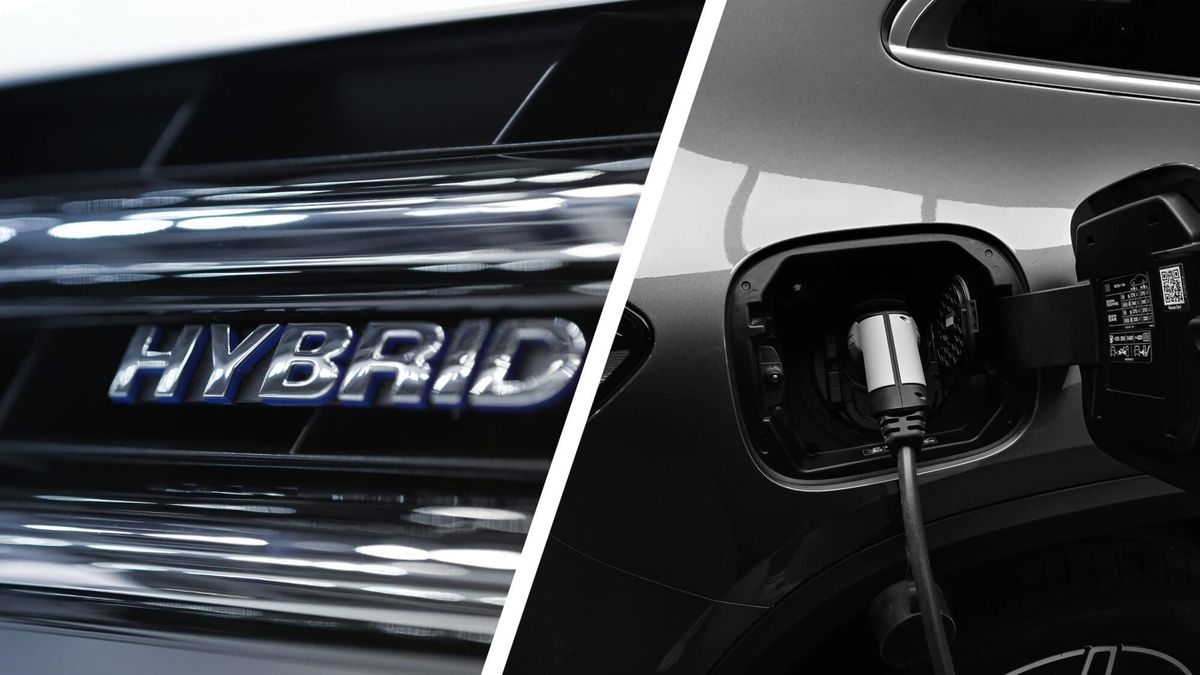
The short answer: In South Africa, most electric car and hybrid batteries carry an 8-year warranty, but the kilometre limit (160,000 to 200,000 km or unlimited) and the conditions differ by brand. Real-world data shows batteries usually outlast that warranty. The bigger financial risks are elsewhere: where you'll charge, insurance premiums, and what happens if something fails after year eight.
With 95 petrol now above R30 a litre inland, many South Africans are asking whether a hybrid or electric car makes financial sense. A question we hear often is: what happens when the battery wears out, and who pays?
This guide is a starting point, not a sales pitch. It gives you the facts, the real costs in rands, and the pitfalls, so you know exactly what you're signing up for. Every figure is sourced, and the sources are listed at the end.
Hybrid, plug-in hybrid or electric: what's the difference?
There are three types of "new energy vehicle", and the money works very differently for each.
| Type | How it works | Battery size | Do you plug it in? |
|---|---|---|---|
| Hybrid (HEV), also called a "self-charging hybrid" | A petrol engine does most of the work, helped by a small electric motor. The battery charges itself while you drive and brake. | Small, e.g. 1.83 kWh in the Chery Tiggo Cross CSH | No |
| Plug-in hybrid (PHEV) | A bigger battery lets you drive short distances on electricity alone, then the petrol engine takes over. | Medium, e.g. 18.3 kWh for about 90 km of electric driving in the Chery Tiggo 8 CSH | Yes, to get the savings |
| Electric (EV or BEV) | Runs on electricity only. No petrol engine. | Large, e.g. 39.4 kWh in the Geely E2 | Yes, always |
Why it matters for your wallet: a plug-in hybrid only saves you serious money if you actually charge it. Driven mostly on petrol, you're carrying a heavy battery around for nothing.
Why it matters for your wallet: a plug-in hybrid only saves you serious money if you actually charge it. Driven mostly on petrol, you're carrying a heavy battery around for nothing.
Why everyone is asking now
Fuel prices and falling EV prices have changed the maths in 2026.
- Petrol is at a record high. From 7 October 2026, 95 unleaded costs R30.25 a litre inland and R29.38 at the coast (CAR Magazine). Coastal 95 has risen almost 48% since March (AutoTrader).
- Buyers are switching. South Africans bought 18,945 new energy vehicles in the first eight months of 2026, already more than the 16,703 sold in all of 2025 (BusinessDay). About one in every twenty new vehicles sold this year is electrified (naamsa, via Novus).
- Most of them chose hybrids. Hybrids made up 49.6% of those sales, plug-in hybrids 36.5% and fully electric cars 13.8% (BusinessDay).
- EVs got much cheaper. In 2023 the cheapest new EV cost close to R800,000. Today it costs well under half that (Cars.co.za).
How long do the batteries really last?
For most owners, longer than the warranty. Batteries don't suddenly die. They slowly hold less charge, so your range shrinks over the years.
The largest real-world study comes from fleet-tracking company Geotab. It analysed more than 22,700 electric vehicles across 21 models (Geotab). Here is what it found:
- Average loss is about 2.3% of capacity per year (Electric Autonomy).
- After eight years, that leaves roughly 82% of the original capacity, so about a fifth less range (Electric Drives).
- Severe failures are rare. Only 1.5% of vehicles lost 30% or more of their capacity.
Three habits that matter in South Africa:
- Charge slowly when you can. Cars that mostly charged on slower AC chargers (at home or work) lost about 1.5% a year. Heavy use of 100 kW+ fast chargers pushed that to about 3% (CAR Magazine UK).
- Heat costs a little. Cars in hot climates lost about 0.4% more per year (Mezha, reporting Geotab). Park in the shade in Limpopo and the Northern Cape summers.
- Don't obsess over keeping it between 20% and 80%. Degradation only sped up when cars sat almost full or almost empty most of the time (Electric Autonomy).
There is local evidence too. BMW South Africa says it has replaced just one battery module, on two cars, since launching its first EV here in 2015. Both repairs were done under warranty (TopAuto).
Battery warranties in South Africa: what you actually get
Eight years is the norm, but the kilometre limit and the conditions differ by brand. These are the terms announced for models sold in South Africa:
| Brand / model | Battery warranty | Vehicle warranty | Source |
|---|---|---|---|
| Chery Tiggo Cross and Tiggo 7 hybrids | 10 years / unlimited km, first owner only | 5 years / 150,000 km | TopAuto, Sowetan |
| BYD Dolphin Surf (EV) | 8 years / 200,000 km | 3 years / 100,000 km | TopAuto |
| Geely E2 (EV) | 8 years / 200,000 km | 4 years / 150,000 km | Geely South Africa |
| Toyota Corolla Cross hybrid | 8 years / 195,000 km | 3 years / 100,000 km | Cars.co.za |
| Volvo electric cars (e.g. EX30) | 8 years / 160,000 km, repaired or replaced if capacity drops below 70% | Not stated in source | Volvo Cars South Africa |
| Toyota bZ4X (EV) and new RAV4 hybrids | 8 years / 160,000 km | Not stated in source | TopAuto |
Notice the gap between the battery warranty and the vehicle warranty. A Dolphin Surf's battery is covered for eight years, but the rest of the car for only three. Budget for that, or price an extended warranty.
The "70%" or "80%" rule, explained
An EV battery warranty usually covers two things. The first is defects: the battery simply fails. The second is excessive wear: the battery's State of Health (SoH) drops below a set percentage of its original capacity before the warranty ends.
- 70% is the most common threshold, including in South Africa. Volvo Cars South Africa states it plainly: if the battery's capacity drops below 70% of its original level within 8 years or 160,000 km, it will be repaired or replaced under warranty (Volvo Cars South Africa). Internationally, Polestar (Polestar) and BYD in Europe (electrive) use the same 70% floor.
- It is not universal. BYD's Saudi Arabian warranty, for example, covers capacity only down to 60% (BYD Saudi Arabia). And BYD's new 8-year / 250,000 km European warranty does not apply in South Africa, where the Dolphin Surf carries 8 years / 200,000 km.
- The "80% rule" you may see online is a generalisation. One widely quoted local article says warranties guarantee 80% but names no brand (AutoTrader). We could not confirm 80% in any South African warranty.
- Self-charging hybrid warranties are quoted in years and kilometres only. None of the South African announcements we found mention a capacity threshold, so ask what counts as a failure.
When something goes wrong: who pays, and what it costs
Inside the warranty: the manufacturer pays, but you may wait
A warranty covers the cost, not the inconvenience. In December 2025, Volvo recalled EX30 models with Extended Range batteries over a fire risk from faulty cells. South African owners were told to cap charging at 70% while they waited, and at least one EX30 in South Africa burnt out (MyBroadband).
The replacement modules only arrived in October 2026, about nine months later. Volvo is now fixing 488 affected cars here and expects to finish within four to six months. Most of those cars get all three battery modules replaced, at no cost, which Volvo says restores the battery to full health. Owners were given extra public-charging vouchers while they wait (Sowetan).
The lesson: every battery for EVs sold here is imported. Before you buy, ask how long parts take to arrive and whether you get a courtesy car while you wait.
Outside the warranty: you pay, and it isn't cheap
- Local quotes are high. A South African battery specialist charges about R185,000 to fit a new 40 kWh pack, and is developing a 70 kWh pack at about R175,000 (TopAuto).
- Be careful with the "R100,000 to R400,000" figure you may see. It comes from US consumer data, not South African prices (AutoTrader).
- A full pack is rarely needed. Many packs are built from modules, so a technician can often replace only the faulty part (Investec).
- Some brands offer cheaper refurbished batteries. Volvo South Africa offers a refurbished battery outside the warranty period, with its own 4-year / 80,000 km parts warranty (Volvo Cars South Africa). Ask your brand whether it does the same.
- Hybrid batteries are much smaller. A self-charging hybrid's battery is a fraction of an EV pack's size, so a replacement should cost far less. Ask the dealer for a quote on the specific model.
The real risk is buying a used EV or hybrid near the end of its battery warranty. If you're shopping second-hand, ask for a battery health (SoH) report from an authorised dealer, and check whether the warranty transfers to you. Chery's 10-year battery warranty, for example, applies to the first owner only.
Insurance: expect to pay more
- Battery cost drives premiums. Insurers say EV battery packs are among the most expensive parts on the car. Manufacturers may require a whole new battery even when only one cell is damaged in an accident (Engineering News).
- Repair networks are still small. Specialist technicians and parts are limited, which also pushes up premiums (same source).
- Normal degradation is not an insurance event. Comprehensive cover protects against accident, fire and theft, not a battery wearing out. Check that your policy lists the high-voltage battery, and that your home charger is covered under your household insurance (Nedbank).
- Breakdowns need a flatbed. You can't walk to a garage with a jerry can. A dead EV has to be loaded onto a truck (same source), so check your roadside assistance cover.
Running costs: what you'll spend per month
An EV charged at home costs roughly a quarter of what a petrol car costs to fuel. But where you charge makes a huge difference.
The example below assumes 1,500 km a month. We used 95 petrol at R30.25 a litre and home electricity at about R3.44 per kWh on a standard prepaid tariff. Public DC fast charging is taken at about R7.50 per kWh. Rubicon charges about R7.00 and GridCars R7.35 to R8.45 (AutoTrader).
| Car type (assumed consumption) | Cost per 100 km | Cost per month (1,500 km) |
|---|---|---|
| Petrol car (6.5 l/100 km) | R197 | R2,950 |
| Self-charging hybrid (4.3 l/100 km, Toyota's claimed figure for the Corolla Cross hybrid) | R130 | R1,950 |
| EV, public DC fast charging only (15 kWh/100 km) | R113 | R1,690 |
| EV, charged at home (15 kWh/100 km) | R52 | R775 |
Your own figures will vary with driving style, traffic, aircon use and your municipality's tariff. Manufacturer consumption claims are usually better than real-world results.
Run your own numbers: our free Petrol vs Hybrid vs EV Calculator lets you enter your own distance, car and electricity tariff. Its defaults are for a compact SUV and include servicing costs, so its per-km figures are higher than the energy-only figures in this table.
What this means:
- Charging at home is the whole point. An EV that relies only on public fast chargers saves you a lot less: about R1,260 a month against petrol, versus about R2,175 when charged at home.
- Solar makes it cheaper still. Spread over a system's lifespan, home solar can bring the cost of electricity down to around 50 to 80 cents per kWh (AutoTrader).
- Servicing should cost less. EVs have fewer moving parts. Investec notes service intervals of every two years or 30,000 km, with mostly battery health checks, brakes and a general inspection (Investec).
Does the hybrid premium pay for itself?
Only if you drive enough. Chery's Tiggo Cross shows the size of the premium: the hybrid Comfort launched at R439,900, and the turbo-petrol Comfort at R399,900 (TopAuto). That's R40,000 more.
Say a hybrid uses 2.2 litres per 100 km less than its petrol version. At 1,500 km a month, that saves about R1,000 a month at today's petrol price. It would take roughly 40 months to recover R40,000. If you finance the car, interest on that extra R40,000 stretches the payback further. Drive less, and it may never pay back.
Ask the dealer for both models' real-world consumption and run your own numbers.
Enter both purchase prices in our Petrol vs Hybrid vs EV Calculator, and it will show you how many months the hybrid or EV takes to pay back its higher price.
The same logic applies to an EV. Using the figures in our running-cost table, an EV saves about R1,260 a month on public charging only, or about R2,175 a month charged at home. That would pay back a price premium of around R60,000 in roughly four years or 2.5 years.
Upfront costs: the price on the windscreen isn't the full price
- EVs carry a higher import duty. Imported EVs pay 25% import duty, compared with 18% on petrol and diesel cars from the EU (BusinessDay). Industry groups lobbied to equalise this, but the February 2026 Budget left the rates unchanged, and there is still no consumer EV subsidy.
- The government incentive is for manufacturers, not buyers. From March 2026, carmakers can claim a 150% tax deduction on investment in new energy vehicle production (CleanTechnica). It may lower prices one day if EVs are built locally, but it doesn't help you today.
- A home charger costs extra, unless it's included. A standard single-phase installation costs about R5,000 to R7,000 for labour, cabling and the compulsory Certificate of Compliance (AutoTrader). Some brands include a wallbox, but read the fine print: Geely gives the E2's free wallbox only to buyers who finance through Geely Finance (Geely South Africa). Also ask whether installation is included.
- Insurance will likely cost more than for a comparable petrol car (see above). Get a quote before you sign the deal, not after.
The most affordable options right now
Starting prices as published in 2026. Prices change often, so confirm with the dealer. "Battery warranty" is shown only where it was published for South Africa.
Fully electric (EV)
| Model | Starting price | Claimed range (WLTP) | Battery warranty |
|---|---|---|---|
| Geely E2 Aspire | R339,900 | 325 km | 8 yrs / 200,000 km |
| BYD Dolphin Surf Comfort | R341,900 | 232 km (TopAuto) | 8 yrs / 200,000 km |
| BYD Dolphin | R539,900 | 427 km | Check with dealer |
| Toyota bZ4X | R1,182,800 | Check with dealer | 8 yrs / 160,000 km |
Self-charging hybrid (HEV)
| Model | Starting price | Claimed fuel use | Battery warranty |
|---|---|---|---|
| GWM Ora 5 HEV Super Luxury | R424,900 | Check with dealer | Check with dealer |
| Chery Tiggo Cross CSH Comfort | R439,900 | 5.4 l/100 km | 10 yrs / unlimited km (first owner) |
| Jaecoo J5 SHS | R459,900 | 5.3 l/100 km | Check with dealer |
| MG3 Hybrid+ Luxury | R469,900 | 4.3 l/100 km | Check with dealer |
| Toyota Corolla Cross 1.8 HEV XS | R506,100 | 4.3 l/100 km | 8 yrs / 195,000 km |
Plug-in hybrid (PHEV)
| Model | Starting price | Claimed electric-only range | Battery warranty |
|---|---|---|---|
| BYD Atto 2 DM-i Comfort | R449,900 | Check with dealer | Check with dealer |
| BYD Sealion 5 Comfort DM-i | R509,900 | 52 km | Check with dealer |
| Geely E5 EM-i Aspire | R599,999 | Up to 105 km | Check with dealer |
| Chery Tiggo 7 CSH Plus | R619,900 | Up to 93 km | 10 yrs / unlimited km (first owner) |
An EV's claimed range is a lab figure. Expect less on the highway at 120 km/h, with the aircon on, or on long climbs.
Charging: the reality outside the big cities
South Africa has more than 600 public charging points, but they are concentrated mainly in the major cities (Engineering News). The network is growing. BYD and Eskom plan 200 to 300 new public charging stations by the end of 2026, open to all brands (EWN).
What this means in practice:
- City driving with home charging is easy. You leave every morning with a "full tank".
- Long road trips need planning. Map your charging stops before you leave. A charger may be in use when you arrive, or out of order, so have a backup.
- No off-street parking at home? A fully electric car is a much harder sell. A self-charging hybrid gives you lower fuel bills without depending on chargers.
- Small towns (including here in Heidelberg): check the chargers on your regular routes before you commit.
Which one suits you?
| Your situation | Best fit | Why |
|---|---|---|
| You can charge at home, and mostly drive in and around town | Electric (EV) | Lowest running cost by far, and few long trips to plan around |
| You can charge at home, but often drive long distances | Plug-in hybrid (PHEV) | Electric for daily trips, petrol for the open road, no charging anxiety |
| You can't charge at home, or you live far from public chargers | Self-charging hybrid (HEV) | Lower fuel bills with zero change to how you live |
| You drive very little | Keep or buy a small, efficient petrol car | You may never earn back the price premium of a hybrid or EV |
| You're buying second-hand | Any type, with a battery health report | Check how much battery warranty is left and whether it transfers to you |
10 questions to ask the dealer before you sign
- What exactly does the battery warranty cover: years, kilometres, and which State of Health percentage counts as a failure?
- Who measures the battery's health, and can I get a copy of the report?
- If the battery fails, do you repair it, replace a module, or replace the whole pack? New or refurbished parts?
- Does the battery warranty transfer to the next owner if I sell?
- What servicing do I need to keep the battery warranty valid, and where?
- How long do battery parts take to arrive, and do I get a courtesy car while I wait?
- When does the general vehicle warranty end, and what does an extended warranty cost?
- Is a home charger included? Is installation included?
- What will this car cost me to insure? Get a quote before you sign.
- What is the real-world range or fuel consumption on the highway, not the brochure figure?
Ask for the answers in writing. If a salesperson can't answer questions 1 to 4, ask to see the warranty booklet.
Frequently asked questions
How long does an electric car battery last in South Africa? Usually longer than the 8-year warranty. Real-world data from over 22,700 EVs shows an average capacity loss of about 2.3% a year, leaving roughly 82% after eight years.
What is the battery warranty on hybrid and electric cars in South Africa? Most brands offer 8 years, with limits from 160,000 km to 200,000 km. Chery offers 10 years with unlimited kilometres on its hybrids, but only for the first owner.
Does the manufacturer replace the battery if it degrades? Usually only if the battery's State of Health drops below a set threshold during the warranty, commonly 70%. Volvo South Africa, for example, uses 70%. The threshold isn't the same for every brand, so check your warranty booklet.
How much does it cost to replace an EV battery out of warranty? A South African specialist quotes about R185,000 for a 40 kWh pack. Often only a faulty module needs replacing, which costs less.
Is it cheaper to run an EV than a petrol car? Yes, if you charge at home. At 1,500 km a month, an EV charged at home costs about R775 in electricity, against about R2,950 in petrol for a typical petrol car.
Is a hybrid worth it in South Africa? It depends on how far you drive. A hybrid can cost around R40,000 more than its petrol version, which may take over three years of fuel savings to recover.
Are electric cars more expensive to insure? Generally yes, because the battery is expensive and specialist repairs are limited. Get an insurance quote before you buy.
The bottom line
The battery is usually not the problem. For most buyers, the money comes down to four things: can you charge at home, how far you drive, what it costs to insure, and how the car is financed.
A car is one of the biggest purchases most people make. Before you sign a finance agreement for a hybrid or EV, check how it fits your budget, especially if a balloon payment or a business purchase is involved. Read what the data shows about how under-35s are financing cars, and the balloon payment risk, then chat to Len on WhatsApp for a second opinion on the numbers.
Sources
Prices, fuel prices and warranty terms correct as at 14 October 2026. Always confirm with the dealer before buying.
Fuel prices and market data
- Confirmed SA fuel price for October 2026 – CAR Magazine
- Petrol breaks R30 a litre for the first time – AutoTrader
- SA's EV industry gets a collective voice as sales accelerate – BusinessDay
- naamsa September 2026 new vehicle sales – Novus Press Bulletin
- 5 most affordable EVs in South Africa (2026) – Cars.co.za
Battery life and warranties
- EV battery health study – Geotab
- Geotab study: EV batteries lose 2.3% per year – Electric Autonomy
- EV battery life survey 2025 – CAR Magazine UK
- Geotab EV battery survey – Electric Drives
- Fast charging and battery degradation – Mezha
- Electric car batteries and warranty – Volvo Cars South Africa
- Geely E2 warranty and offers – Geely South Africa
- Warranty FAQ – Polestar
- BYD extends battery warranty to 250,000 km – electrive
- Aftersales and warranty – BYD Saudi Arabia
- Can electric car batteries be replaced? – AutoTrader
- Highest-mileage electric car you can buy in South Africa – TopAuto
Repairs, replacement costs and insurance
- 9 months for a new battery in South Africa – MyBroadband
- Volvo starts replacing batteries in recalled EX30s in SA – Sowetan
- It costs R175,000 to replace this car part – TopAuto
- Are electric car batteries expensive? – AutoTrader
- New energy vehicles: electric cars in South Africa – Investec
- Repairability, and EVs more expensive to insure – Engineering News
- Insuring your electric vehicle – Nedbank
Running costs, taxes and charging
- What does owning and driving an EV in SA really cost? – AutoTrader
- EV tax mismatch risks stalling SA's shift to clean mobility – BusinessDay
- CHARGE calls on Finance Minister to address EV duties – CleanTechnica
- Solar-powered EV charging network set for expansion – Engineering News
- Eskom and BYD join forces on 200 new charging stations – EWN
Models and prices
- Geely E2 (2026) price and specs – Cars.co.za
- New Geely E2 is South Africa's cheapest electric car – TimesLIVE
- Say hello to the cheapest electric car in South Africa (BYD Dolphin Surf) – TopAuto
- 5 cheapest electric cars in South Africa – TopAuto
- New Toyota models in South Africa 2026 – Durban South Toyota
- Toyota launches RAV4, Land Cruiser FJ and bZ4X – TopAuto
- Toyota Corolla Cross 1.8 HEV XS – Cars.co.za
- Hybrid Toyota Corolla Cross GR-Sport – TopAuto
- Chery Tiggo Cross CSH launch – TopAuto
- Chery Tiggo 7 CSH debuts in SA – Sowetan
- Chery Tiggo 8 CSH launch – TopAuto
- 5 most affordable traditional hybrids in SA (2026) – Cars.co.za
- 5 most affordable hybrid vehicles in SA (2026) – CAR Magazine
- 5 cheapest hybrid cars you can buy in SA – TopAuto
- Cheapest plug-in hybrid SUV in SA (BYD Atto 2) – TopAuto
- South Africa's cheapest hybrid vs plug-in hybrid – TopAuto
- 5 most affordable plug-in hybrids in SA (2026) – CAR Magazine