New vs Used, Toyota vs Chery: What the Data Shows About How Under-35s Are Financing Cars in 2026
Standard Bank's 2026 data shows how under-35 South Africans are financing cars, and the balloon payment risk many don't realise they're taking on.

Most car finance advice aimed at young South Africans assumes you're chasing status. A shiny new set of wheels the moment you can qualify for finance. The data tells a different story. According to Standard Bank's 2026 Youth Barometer Report, most under-35 buyers finance second-hand vehicles, choose practical brands over premium ones, and increasingly turn to affordable Chinese manufacturers as an entry point into car ownership. The one area worth genuine caution: nearly half of under-35 buyers choosing Chinese brands are doing so with a balloon payment attached. A structure that's easy to underestimate the long-term cost of.
Why a Car Still Matters, Even When Money Is Tight
Despite high youth unemployment and real affordability pressure, demand for car finance among South African youth hasn't dropped off — it's remained a consistent, significant share of the market. Between 2021 and April 2026, Standard Bank financed R89.2 billion in retail vehicle purchases, and under-35s accounted for 34.9% of every deal done in that period.
That's not because young buyers are earning the most. Purchases financed by the highest earners make up a relatively small slice. Most under-35 buyers earn between R20,000 and R50,000 a month, with the R20,000–R35,000 band alone accounting for over a fifth of all youth-financed purchases. For most people in this bracket, a car isn't a lifestyle upgrade. It's what makes getting to work reliably, on time, every day — possible in the first place. In a country where public transport can be unpredictable and opportunities are often spread across a city, a car functions less like a luxury and more like infrastructure for participating in the economy at all.
Used Is Still the Default, But New Is Becoming More Accessible
The majority of under-35 vehicle finance deals, 70.5%, are for used vehicles, slightly higher than the 64.1% seen among buyers over 35. The average financed value for a used vehicle sits around R287,000, against roughly R365,000 for new.
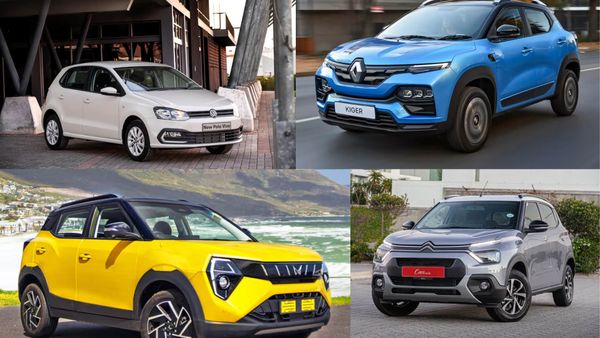
Brand choice reflects the same practicality: Toyota and Volkswagen remain the two most-financed brands by volume among under-35 buyers, driven largely by unglamorous, dependable models — the VW Polo Vivo and Polo/Polo Playa, and Toyota's Starlet and Corolla Cross. Ford, Suzuki, and Hyundai round out the top five. These aren't aspirational purchases. They're the vehicles most likely to hold their value, keep running, and cost the least to insure and maintain.
The Real Shift: Chinese Brands Are Rewriting the Entry Point to New-Car Ownership
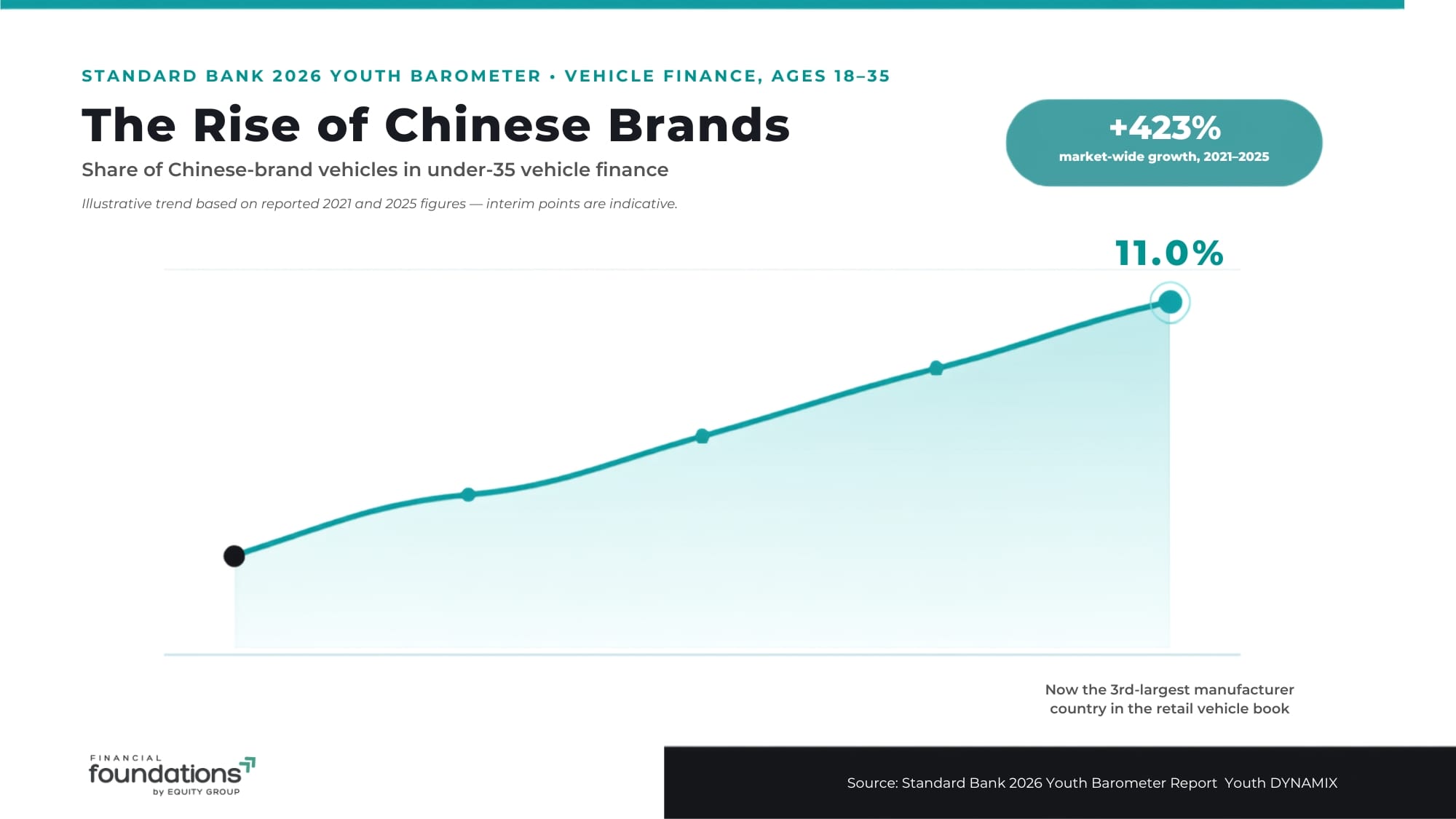
The most significant trend in the data isn't about used cars at all, it's about new ones becoming newly affordable. Chinese-brand adoption among under-35 buyers grew from just 3.1% of financed cars in 2021 to 11.0% by 2025, and Chinese brands overall have grown by more than 423% across the whole market over the same period. By April 2026, Chinese manufacturers accounted for 16.7% of all originations in Standard Bank's retail vehicle book, enough to make China the third-largest manufacturer country in the portfolio, ahead of the US and South Korea.
What's notable is how youth are buying these vehicles: nearly seven in ten (67.9%) of under-35 buyers financing a Chinese brand are buying it brand new, compared to just 29.5% of youth buying new vehicles across every other brand combined. For a generation that's typically been priced out of new-car ownership and pushed toward the used market, competitively priced, well-specced Chinese brands like Chery and Haval are functioning as a genuine new-vehicle entry point, not just a cheaper alternative to a used Toyota.
This isn't a fringe trend. Entry-level vehicles, the smallest segment by volume, recorded the fastest growth of any segment between 2021 and 2025, increasing by 339%, concentrated almost entirely among Chinese manufacturers in the lower-priced SUV category.
The Part Worth Slowing Down On: Balloon Payments
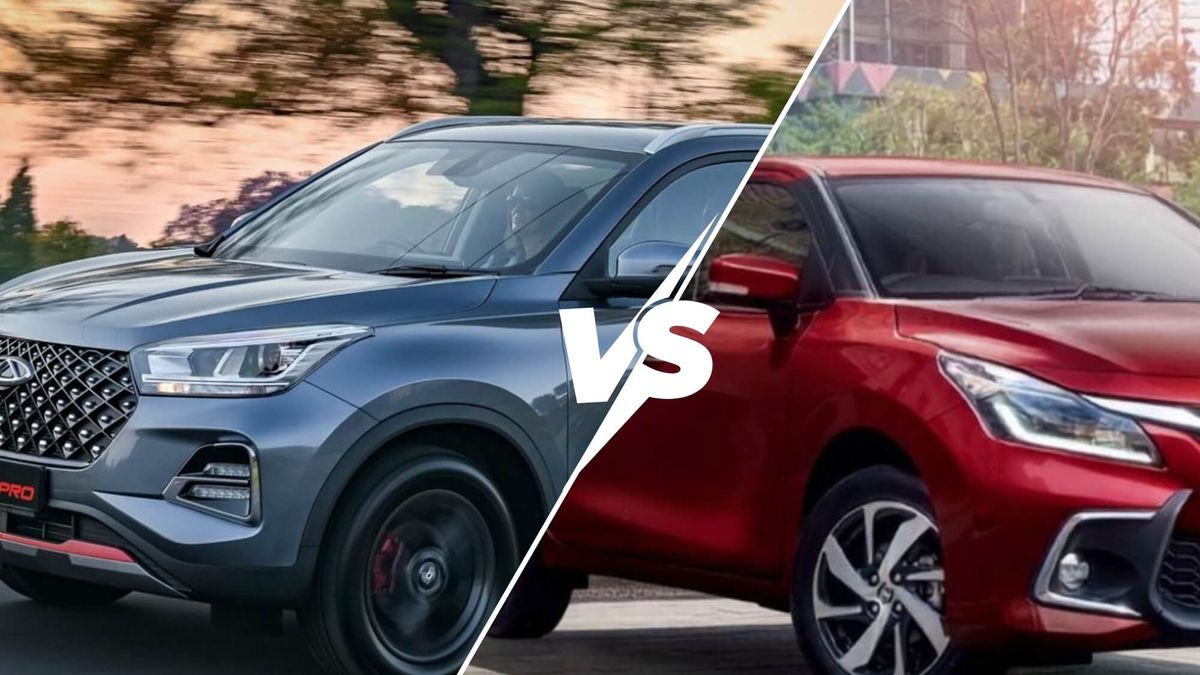
Here's where the data flags something genuinely worth understanding before you sign anything. Balloon payments where a portion of the vehicle's value is deferred to a lump sum at the end of the finance term, in exchange for lower monthly instalments are common across all age groups in South Africa. But among under-35 buyers, they're disproportionately concentrated in Chinese-brand deals: roughly half of all financed vehicles in this category include a balloon structure, with models like the Chery Tiggo 4 Pro and Haval Jolion representing the largest concentration of this financing type.
A balloon payment can make a car feel more affordable month to month — which is exactly why it's appealing when you're managing a tight budget. But it doesn't make the car cheaper. It shifts a chunk of the cost to the end of the contract, when you'll either need a lump sum to settle it, refinance it, or trade the car in before the balance comes due. Many of these contracts run until 2029–2031, and how well these vehicles hold their resale value by then will directly determine how manageable that final payment actually is.
None of this means a balloon structure is a bad choice — for some buyers, it's a genuinely sensible way to access a newer, better-equipped vehicle sooner. It just means the "affordable monthly instalment" advertised on a finance deal isn't the full picture of what you're committing to.
A Simple Way to Think Through Any Car Finance Deal
Before signing, it's worth working through three questions on any offer, whatever the brand:
- What's the total cost, not just the monthly instalment? Ask for the full repayment amount including any balloon payment, and compare it to the vehicle's price. A lower monthly figure that hides a large final payment isn't automatically the better deal.
- What will the car be worth when the balloon payment is due? Newer manufacturers with a shorter track record in South Africa are still building resale-value history — worth factoring in if you're relying on trade-in value to cover a balloon at the end.
- Does the repayment fit comfortably within your budget today, not just once you get a raise or bonus you're hoping for?
If you want a clearer picture of where a car repayment fits against everything else you're managing, Equity Group's free Financial Health calculator can help you see the full picture — not just the finance quote in front of you.
Frequently Asked Questions
Is it worth buying a Chinese brand car in South Africa?
For many buyers, yes — Chinese manufacturers like Chery and Haval have become a genuine entry point to new-vehicle ownership through competitive pricing and strong specifications. Standard Bank's 2026 data shows Chinese-brand financing among under-35s has more than tripled since 2021. The main thing to check carefully is whether the deal includes a balloon payment, and what that means for your total cost over the finance term.
What is a balloon payment on car finance?
A balloon payment is a lump sum you agree to pay at the end of your vehicle finance term, in exchange for lower monthly instalments throughout the contract. It reduces what you pay each month, but doesn't reduce the total cost of the car — you'll need to settle, refinance, or trade in the vehicle to cover that final amount when the term ends.
Is a used car cheaper to finance than a new one in South Africa?
Generally, yes. Data shows the average financed value for a used vehicle among under-35 South Africans is around R287,000, compared to roughly R365,000 for a new vehicle. Used vehicles also make up the majority — over 70% — of vehicle finance deals in this age group, reflecting a more affordability-driven approach to vehicle ownership.
Sources:
Standard Bank 2026 Youth Barometer Report, in partnership with Youth Dynamix.